Getting accepted into a US university or winning a fully funded American scholarship is a massive achievement. But before you can pack your bags, you have to conquer one final challenge: The F-1 Student Visa.
The F-1 visa is the most common visa for international students looking to study at an accredited US college, university, or English language institute. While the process can seem intimidating, it is actually highly structured and straightforward once you know the steps.
In this comprehensive guide, we will break down the exact checklist, the fees you need to pay, and the interview steps required to secure your US student visa without any stress.
Apply for US Scholarships First!
Before you apply for an F-1 visa, you need to be accepted into a program. Check out these incredible fully funded USA opportunities currently open on ScholarshipHub:
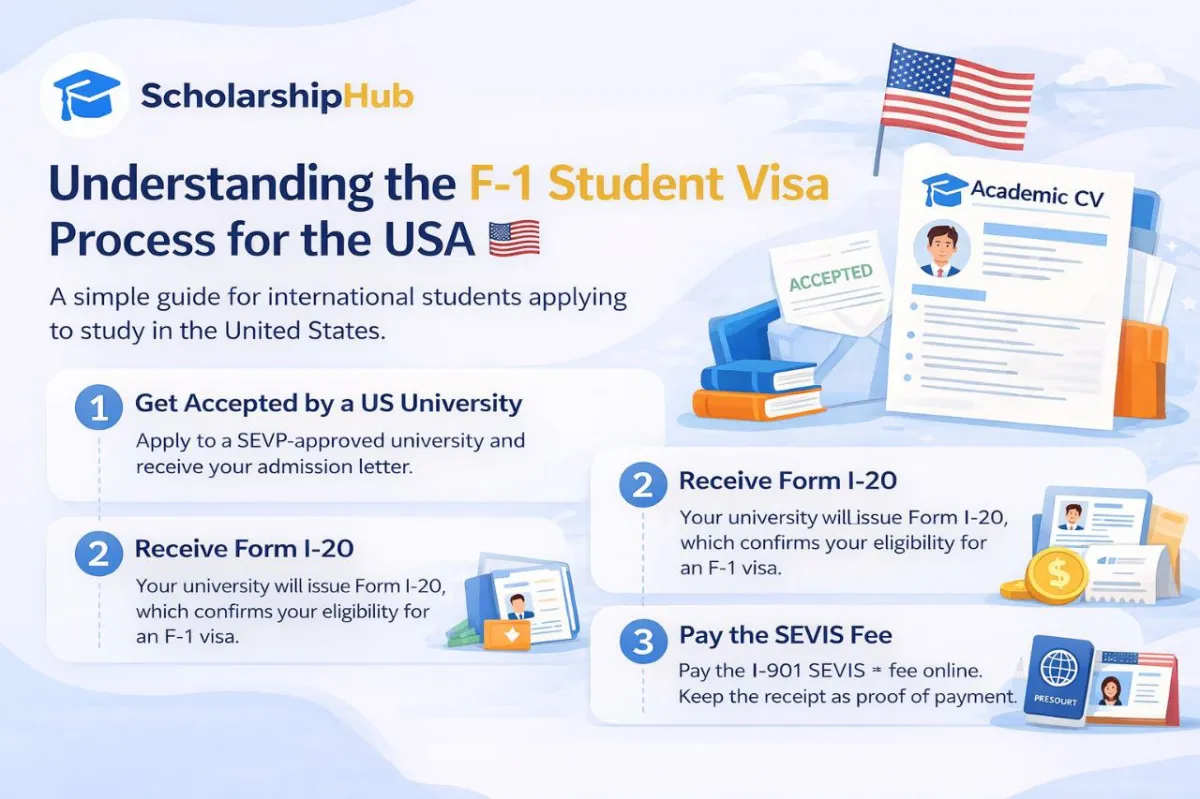
Step 1: Receive Your Form I-20
You cannot apply for a student visa until your university has officially accepted you and entered your information into the SEVIS (Student and Exchange Visitor Information System) database.
Once accepted, your university will mail or email you a Form I-20. This document is the most important piece of paper in your visa journey. It details your program dates, your estimated living expenses, and how your studies are being funded (e.g., personal funds or a university scholarship). Check it carefully for any spelling errors!
Step 2: Pay the SEVIS I-901 Fee
Before you fill out your visa application, you must pay the SEVIS I-901 fee. This fee supports the automated system that keeps track of students and exchange visitors.
- The Cost: As of recent updates, the fee for F-1 students is $350.
- How to Pay: You must pay this online at FMJfee.com.
- Important: Print the payment confirmation receipt immediately. You will need to bring this paper to your embassy interview.
Step 3: Complete the DS-160 Application
The DS-160 is the US government’s online nonimmigrant visa application form. It takes about 90 minutes to complete.
- You will need to upload a recent visa-style photograph (2x2 inches, white background, no glasses).
- You will answer detailed questions about your family, background, education, and travel history.
- Once completed, you will receive an alphanumeric barcode confirmation page. Print this confirmation page.
Step 4: Pay the Visa Application Fee & Schedule Your Interview
Now, you must pay the standard visa application fee (also known as the MRV fee), which is currently $185. Once paid, you can schedule your interview appointment at the nearest US Embassy or Consulate.
Pro Tip: Visa wait times can be extremely long during the summer months (May - August). Schedule your interview the moment you receive your I-20!
Step 5: Nail the Embassy Interview
Your visa interview will likely last less than 3 minutes. The consular officer is looking to verify three main things:
- Are you a legitimate student? You must know your university's name, your major, and why you chose that specific program.
- Can you afford it? If you have a fully funded scholarship, bring your official award letter. If you are self-funded, bring authentic bank statements proving you have enough cash to cover the amount listed on your I-20.
- Will you return home? (Section 214(b)) The F-1 visa is a non-immigrant visa. You must prove you have strong ties to your home country (family, future job prospects, or property) and that you intend to leave the USA after graduation.
Final Thoughts
Organize all of your documents—your passport, I-20, SEVIS receipt, DS-160 confirmation, financial proofs, and academic transcripts—in a neat folder before your interview day. Speak clearly, be honest, and show genuine excitement for your academic future.
If you are nervous about answering questions under pressure, make sure to read our comprehensive guide on The Ultimate Guide to Acing Your Scholarship Interview. The same confidence techniques apply directly to your visa interview!